11 min read · 14 August 2024
Lighting Egyptian cuisine: a styling primer
Why molokheya, koshary and ful all need different light — and what most photographers get wrong about Egyptian food.

Egyptian food is, photographically, harder than it looks. It is also harder than most photographers — Egyptian and otherwise — give it credit for. There is a default assumption among generalist food photographers that warm overhead light works for everything in the regional repertoire. It does not. A koshary photographed in the same light as a fattah will read as visually identical, and both will read as muddy.
The technical reason is that the dishes that anchor Egyptian cuisine sit in three distinct color families. Tomato-based dishes — fattah, mahshi sauce, koshary's daqqa — live in the warm reds and oranges. Tahini and labneh dishes live in the high-key whites and neutrals. Greens — molokheya, sayadeya garnish, fresh herbs — live in cool, slightly desaturated mids. Light each family the same way and you flatten an entire cuisine into a single mood.
Start with molokheya. Most photographers shoot it in raking warm light to give it 'soul,' and the result is a frame that reads as an undifferentiated green-brown puddle. Molokheya rewards cool, high overhead light with deep negative side fill. The leaves catch the cool top key, the broth holds its true army green, and the fried garlic on top — which is the visual story — finally reads as discrete elements. We light molokheya the same way we light a leafy salad.

Koshary is the inverse problem. The dish is structurally a layered tower — rice, lentils, pasta, daqqa, fried onion — and the camera reads it through tonal contrast. It needs warm directional light, raked low from the side, with a long fill on the opposite face. The fried onion catches the highlight, the daqqa reads as a separate red layer, and the underlying carbohydrate stack actually reads as three different ingredients rather than one beige column.
Ful is the dish photographers most often abandon. It is, after all, a brown puree. We've found that ful only photographs convincingly with tight macro framing, a single hard top key, and the steam still rising — meaning the dish has to be plated and shot inside the first ninety seconds. After that, surface tension breaks, the cumin oil sinks, and the photograph loses the only thing that gives ful its visual identity.

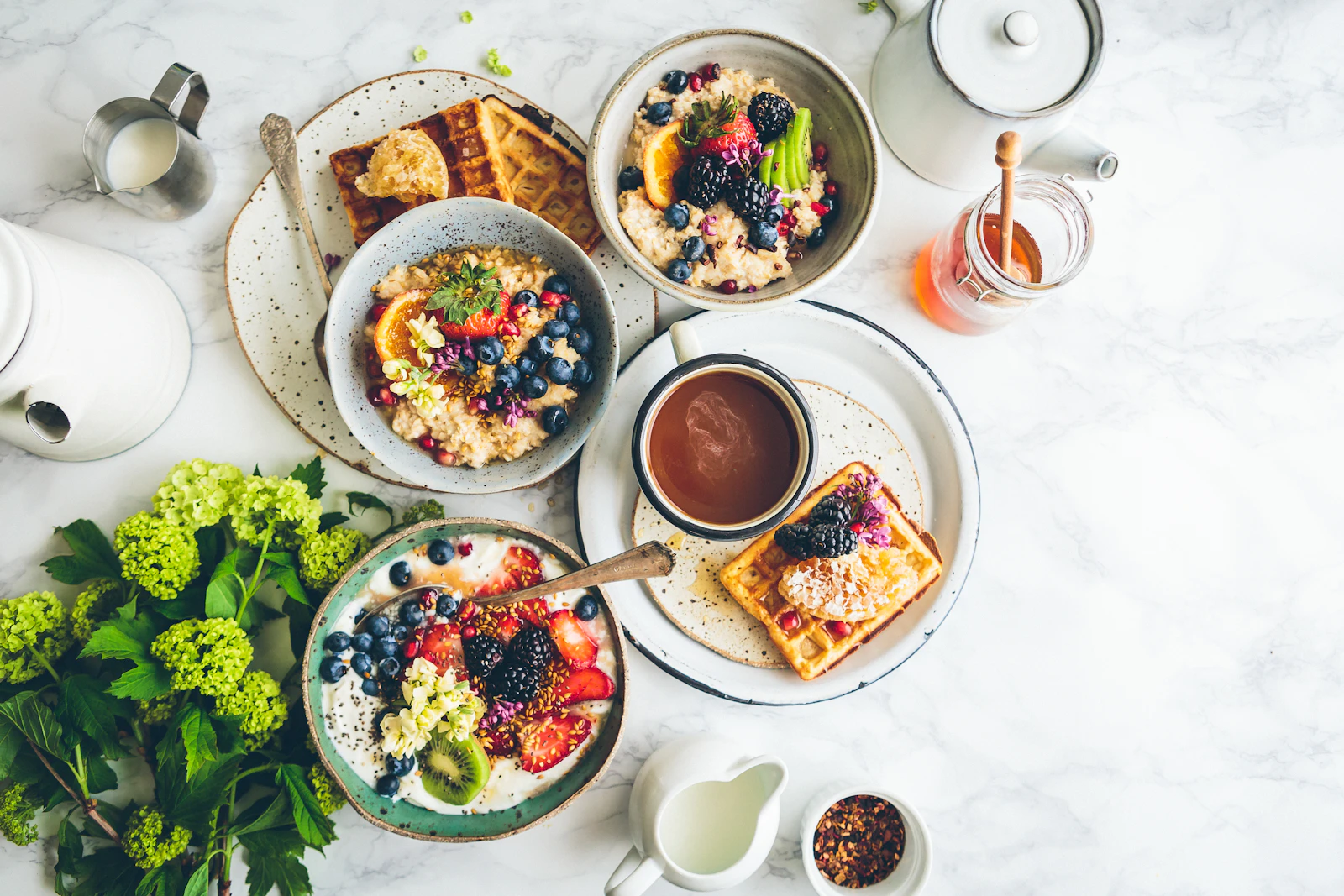
Mahshi — stuffed vegetables — is a styling problem more than a lighting problem. Most photographers shoot the bowl. The bowl is rarely the story. The cut is the story. We routinely photograph a single mahshi cut open on the side of the plate, with the rice filling spilling, and we light it the way we'd light a still-life: directional warm side key, deep shadow, narrow depth of field. The dish becomes a portrait.
The hardest dish in the canon to photograph well is om ali. The reason is texture: it is a soft, blistered, pale-brown surface, and lighting it with anything other than a hard top key produces an image of beige cement. Hard light, raked, tight macro, every blister catching its own shadow.
Beyond the dish-by-dish problem, there's a broader argument about how Egyptian cuisine has been photographed historically. The dominant aesthetic — and we're not going to name names — has been a kind of warm, copper-toned, suuk-coded look that flattens everything into 'heritage.' We don't believe Egyptian food needs photography that looks like an antique. The cuisine is alive, current, and contemporary, and the photography should treat it that way.
When we are asked to brief in-house teams or train a client's social photographer, we send them home with a one-page document: a list of dishes, a recommended primary light, a recommended fill direction, and a recommended color reference image. It is the single most useful thing we have ever produced. We will not share it publicly because half its value is the discipline of building it yourself for your own menu. But the principle is portable: light Egyptian food dish-by-dish, not as a category.

Written from the studio by
Magy
Founder & Photographer · Magy Studios
Previous
Why your menu photography is killing your conversions
Next
Pre-production: the real reason shoots succeed